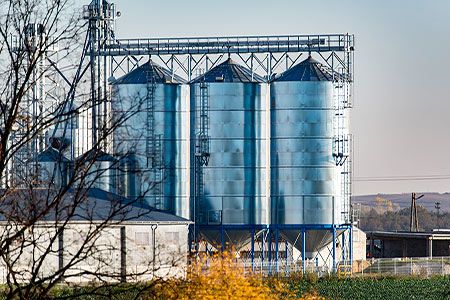
POET acquires Flint Hills Resources’ biofuel business
POET has acquired Flint Hills Resources’ biofuel business, increasing POET production capacity to 3 billion gallons per year.

Stay up to date with the latest news and updates from the downstream industry.
POET has acquired Flint Hills Resources’ biofuel business, increasing POET production capacity to 3 billion gallons per year.

Chevron Phillips Chemical has broken ground on a new world-scale unit for on-purpose 1-hexene in Old Ocean, Texas, US, near its Sweeny facility.

Venture Global LNG has announced plans to capture and sequester carbon at its Calcasieu Pass and Plaquemines LNG facilities.

Eurotank Amsterdam is investing in the conversion of its gas oil tanks, making them suitable for storing biofuels, mixed biofuels and hydrotreated vegetable oil (HVO), following a successful pilot project.
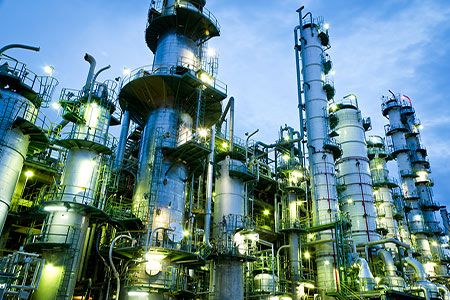
Lummus Technology has announced that its Green Circle business and Synthos have started collaborating to commercialise Synthos' biobutadiene technology.

In the build-up to the 2021 hurricane season, the AFPM has addressed a number of frequently asked questions.

Wood Mackenzie reports on how Europe has become a battleground for global LNG price formation.

Applied Analytics has secured an order from ABB Engineering (Shanghai) Ltd for analytical equipment associated with the Thai Oil Clean Fuels Project.
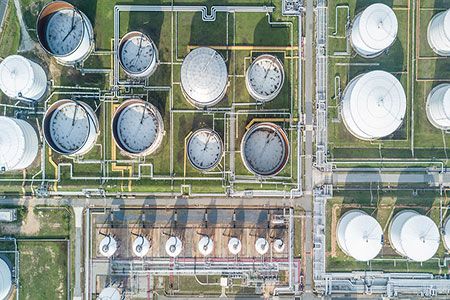
Gordon Lindsay, TÜV SÜD National Engineering Laboratory, UK, makes the case for downstream facility operators switching from time-based calibrations to automated and intelligently lead condition-based calibrations on devices such as flow meters.

Shell has sold its Mobile Chemical refinery and associated co-located logistics infrastructure, including product racks, an associated dock, and the Blakeley Island terminal, to Vertex Energy.

Axens has signed an agreement with Hengyi Industries to provide FLEXICOKING technology.

IDTecEx discuss how carbon capture technology may be essential in helping in the fight against climate change, but that carbon capture from power stations and steel manufacturing plants may not be enough to avoid the worst impacts.