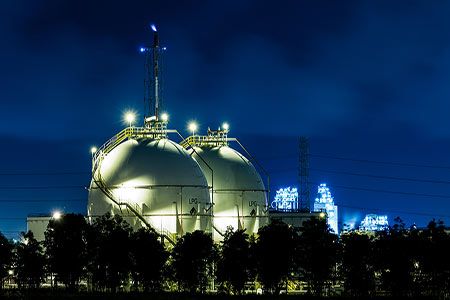
EIA: Natural gas storage capacity remained essentially unchanged in 2020
According EIA, natural gas storage capacity remained essentially unchanged in 2020; however, some operators revised earlier estimates, increasing working gas capacity.

Browse the latest us energy information administration news news and articles.
According EIA, natural gas storage capacity remained essentially unchanged in 2020; however, some operators revised earlier estimates, increasing working gas capacity.

According to EIA analysis, planned refinery outages during the 2Q21 are unlikely to cause a significant shortfall in the supply of petroleum products in the US, particularly in transportation fuels including gasoline, jet fuel, and distillate fuel.

EIA reports that China’s refineries processed more crude oil than US refineries for most of 2020.

The US Energy Information Administration expects the US – a net exporter of petroleum in 2020 – to return to being a net petroleum importer on an annual basis in both 2021 and 2022.

The US Energy Information Administration expects production of all fossil fuels – crude oil, coal, dry natural gas, and natural gas plant liquids – to increase in 2022, but forecast fossil fuel production will remain lower than the 2019 peak.
US regular retail gasoline prices were on average 44 cents/gal (17%) lower than in 2019.
For the week ending 13 November US distillate inventories fell to 143 million barrels, according to the US Energy Information Administration.
As of 30 October, US refinery runs were 14 million bpd, or about 13% lower than the average for this time of year, according to the EIA Weekly Petroleum Status Report.
In its latest Short-Term Energy Outlook (STEO), the US Energy Information Administration expects 5% more US propane consumption this winter compared with last winter.
In 1H20, the US exported 5.4 million bpd of petroleum products, a slight increase of 48 000 bpd (1%) from 1H19.

Demand for motor gasoline increased in May as many US states began to relax stay-at-home orders, but demand for jet fuel continued to decline because of reduced commercial air travel.
The US EIA has reported that petroleum demand will remain below 2019 levels for several more months.