
The rise of AI and advanced analytics
Published by Ellie Brosnan,
Editorial Assistant
Hydrocarbon Engineering,
As digital technologies evolve throughout the process industries, a new generation of engineers is rethinking how to approach their work. Traditionally, analysts spent roughly 90% of their time gathering, cleansing, and contextualising data, leaving only 10% for actual analysis – identifying anomalies, patterns, and optimisation opportunities. However, the rise of automated software and artificial intelligence (AI) is quickly upending that trend, freeing up considerable subject matter expert (SME) time for more valuable efforts.
By dramatically reducing data preparation time and uncovering insights hidden in complex datasets, AI is reshaping oil and gas and petrochemical operations. A Deloitte survey underscores this shift: 94% of organisational leaders believe AI is or will be critical to their companies’ ongoing success.1 This article explains how the industry is using AI and advanced analytics to improve operational efficiency, exemplified with notable case studies.
AI’s expanding role
AI is now influencing nearly every market segment globally. While consumer-oriented sectors such as retail, logistics, and healthcare are aggressively adopting AI to understand consumer needs and optimise service delivery, the process industries are more cautious. Safety, regulatory compliance, and operational reliability demand a slower and more methodical approach, so for oil, gas, and petrochemical operations, growth may not be explosive, but it is steady.
Security and reliability remain top concerns as companies explore AI’s potential. AI can range from ‘narrow’ applications – such as self-driving cars that follow programmed routes while adapting to traffic or weather – to more advanced systems that respond with human-like adaptability.
In the process industries, generative AI (GenAI) and machine learning (ML) are currently receiving the most attention. These tools analyse patterns, predict outcomes, and gradually improve through iterative exposure to data, helping companies address reliability challenges and implement predictive maintenance strategies.
The buzz surrounding AI mirrors that of earlier technology trends like ‘cloud computing’ and ‘big data,’ some of which became foundational, while others faded quickly. AI, however, has already demonstrated undeniable impact and shows no sign of diminishing anytime soon.
AI in the process industries
Refiners are exploring AI to enhance productivity, quality, and preventive maintenance as part of their digital transformation efforts. A key to success is ensuring AI systems can access high-quality, centralised data. Many industrial environments either have too little usable data or vast quantities stored in scattered siloes, and before any AI model can deliver meaningful insights for process improvement, organisations must overcome existing data availability and quality challenges.
Generative AI’s potential in oil and gas and petrochemicals is particularly promising. According to McKinsey, continued investment in digital and AI technologies in the petrochemicals industry can increase margins from existing assets by 3 - 5%, fundamentally reshaping how companies evaluate and optimise their capacity footprint.2
AI is also playing a critical role in workforce development, used to train engineers, bridge experience gaps, and preserve institutional knowledge. As experienced personnel retire and the workforce shifts, AI-driven platforms are accelerating knowledge transfer and upskilling, empowering teams to address operational issues faster and more effectively.
From data to decisions
Advanced analytics and AI platforms simplify data integration, contextualisation, and predictive modelling in industrial environments. This is accomplished by gathering information from field sensors, process historians, data lakes, enterprise resource planning (ERP) systems, and asset management tools. The software then cleanses, organises, and merges the information into a single, comprehensive dataset, facilitating detection of outliers, inconsistencies, and emerging issues for mitigative response.
Users can interact with this contextualised data through intuitive dashboards – which include graphs, heat maps, and correlation charts – to reveal trends and process relationships. By translating complex multivariate calculations into visual insights, these platforms empower plant teams to make faster, better-informed decisions without requiring deep programming or analytics expertise. The no-code interfaces also streamline workflows, providing a clear view of plant performance and maintenance needs.
Predictive models powered by AI are particularly effective for forecasting equipment failures or process upsets by identifying subtle patterns in historical and real-time data. Furthermore, accurate predictions support strategic maintenance scheduling to prevent downtime and reduce maintenance costs.
Results
Tallgrass Energy optimises turbine maintenance
Tallgrass Energy, a prominent player in the energy sector, faced significant operational hurdles in managing the maintenance of its critical turbine fleet. The company was grappling with unpredictable turbine runtimes and volatile pipeline conditions, which made scheduling essential overhauls complex and often reactive (Figure 1).
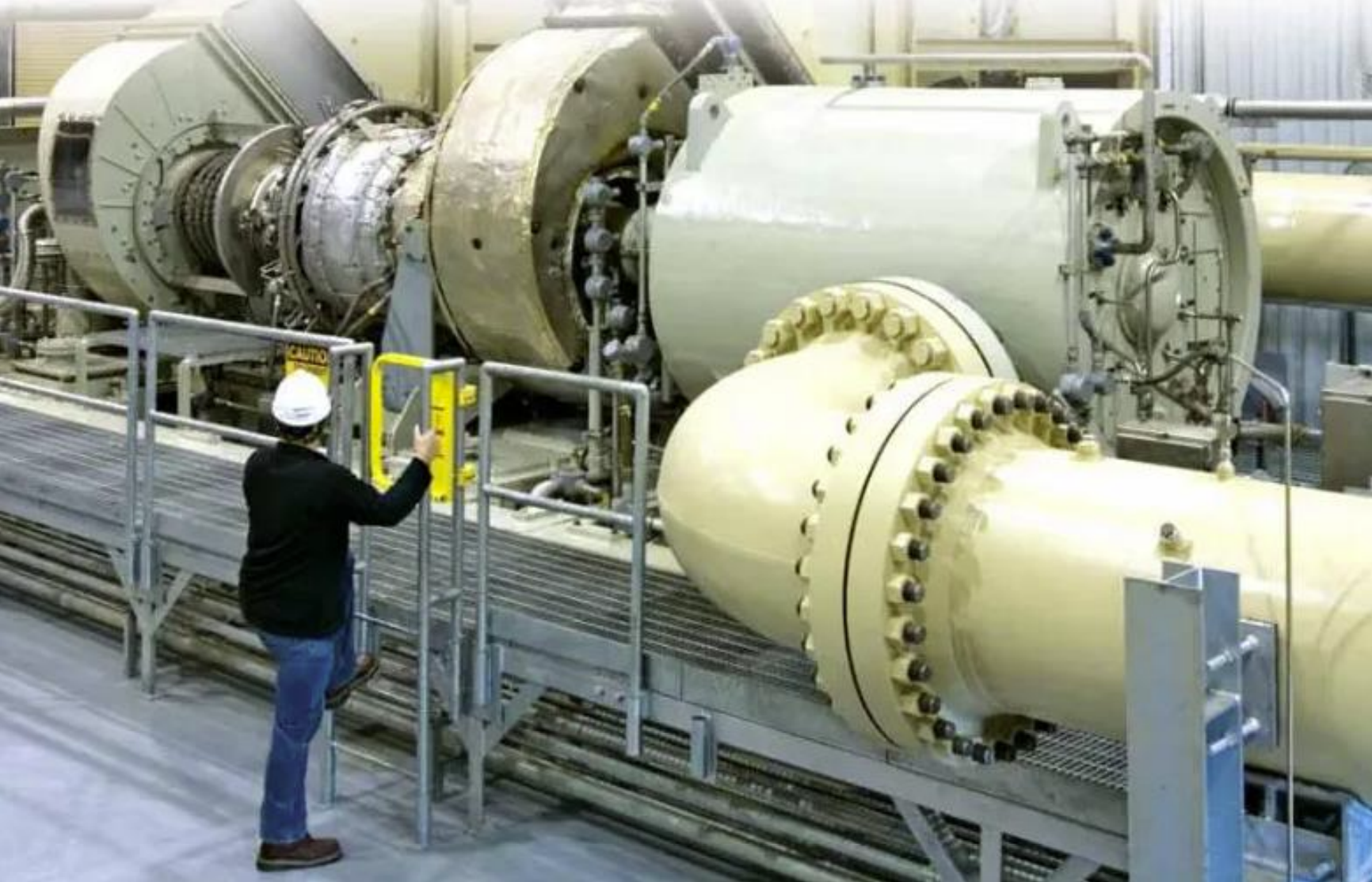
Tallgrass Energy implemented Seeq to identify turbine operational anomalies and correlate these with sources of volatility, such as pipeline feedstock quality and degrading turbine equipment health.
This lack of predictability not only posed a risk to operational reliability, but it also introduced considerable uncertainty into financial planning, with the potential for inefficient resource allocation and costly unexpected downtime. Additionally, turbine health tracking and maintenance projections required cumbersome manual review and planning, reducing SME capacity for process optimisation.
To address these challenges, the company implemented Seeq, an advanced analytics and AI platform, facilitating a transition from reactive to proactive and data-driven turbine maintenance. The software provided real-time visualisation of turbine operational status across multiple compressor stations, simplifying monitoring and empowering plant personnel to rapidly identify and respond to any undesirable operational situations or performance deviations. Automated scheduling within the platform quickly replaced manual calculations and guesswork with precise, data-backed projections.
By accurately predicting the optimal time for turbine maintenance, the company quickly realised over US$6 million in savings, minimising the risk of unexpected failures while avoiding unnecessary overhauls. The enhanced scheduling capability also provided better resource coordination for long-term planning and reliability improvements.
Phillips 66 reduces coke drum blowouts
In the competitive and hazardous environment of oil refining, Phillips 66 faced a significant safety challenge with coke drum blowouts at its Borger Refinery, US. These incidents, which entail a sudden release of hot materials and gases, pose serious risks to personnel and equipment.
Minor blowouts at the facility were often going unnoticed, making it difficult to identify patterns and implement effective preventive measures. Furthermore, the manual procedure of analysing data to detect these events was time-consuming and inefficient, hindering proactive operational improvements. Without clear understanding of the frequency and nature of blowouts, the refinery was exposed to unnecessary risks.
Fuelled by these concerns, the company implemented Seeq to automate coke drum blowout detection, including those that were previously missed (Figure 2). Automated data correlation provided a much clearer picture of incident patterns and occurrences, revealing that blowouts tended to occur in clusters, prompting the refinery to proactively address the specific conditions leading to the events. It also provided the data-driven evidence necessary to justify operational changes and to guide more effective mitigation strategies.

Phillips 66 used Seeq to detect coke drum blowouts and produce insights to minimise recurrence.
The ability to automatically identify and analyse these events drastically reduced manual efforts required by engineers, freeing up more time to develop and implement optimisation solutions. Additionally, this shift from a reactive to a proactive approach enabled the team to implement more effective operational enhancements, improving safety and reliability.
Embrace analytics to drive efficiency
Advanced analytics and AI platforms are empowering manufacturers and refiners to efficiently tackle complex process challenges, implement meaningful improvements, shift from reactive to predictive maintenance, increase production uptime, and drive more profitable operations. As AI proliferates across the industrial landscape, every company must consciously assess their digital readiness and opportunities for optimisation, then work to bridge the gap.
By embracing these digital tools and integrating them into everyday workflows, organisations can reach new levels of efficiency and maintain a competitive edge in today’s fast-paced industrial markets.
References
- ‘Fueling the AI transformation: Four key actions powering widespread value from AI, right now, 2022’ Deloitte Consulting LLP.
- ÇETINKAYA, E., and PRIETO, M., ‘Petrochemicals review: Where we are now and where we’re going’, McKinsey and Co., (2024), https://www.mckinsey.com/industries/chemicals/our-insights/petrochemicals-review-where-we-are-now-and-where-were-going.
Read the article online at: https://www.hydrocarbonengineering.com/special-reports/12012026/the-rise-of-ai-and-advanced-analytics/
You might also like
The Hydrocarbon Engineering Podcast
A podcast series for professionals in the downstream industry featuring short, insightful interviews. Subscribe on your favourite podcast app to start listening today.


