Editorial comment
“We’d love to know what President Trump was going to do – and when he was going to do it – because we’re dealing in a wonderfully unpredictable world.”
Register for free »
Get started now for absolutely FREE, no credit card required.
When I spoke to Alan Gelder, SVP of Refining, Petrochemicals, and Oil Markets at Wood Mackenzie earlier this year for an episode of the Hydrocarbon Engineering Podcast, uncertainty around US policy in Iran topped his list of risks for the year ahead.1 Now that events have begun to unfold, that sense of unpredictability feels more pertinent than ever. At the time of writing, the world remains on tenterhooks as the conflict evolves, with serious concerns about broader economic disruption.
As I’m sure you can imagine, my inbox has been overflowing on a daily basis with press releases and market analysis about the current situation, highlighting just how fast developments are moving. It would be unwise to use this monthly column to delve too deeply into a situation that is constantly evolving. However, we have found a weekly blog from our good friends at Wood Mackenzie particularly useful during the crisis. Their team of experts have been using the ‘boiling frog’ analogy to monitor how gradually intensifying pressures in the oil market can suddenly reach a tipping point. By mid-March, the water in the metaphorical saucepan was close to bubbling, after Israel hit Iran’s South Pars gas field and the retaliatory strike on Qatar Energy’s Ras Laffan LNG facilities.2 In the time since this issue was sent to press, it’s likely that the heat on the stove will have intensified and reduced on numerous occasions, and with it the price of oil and gas. But I hope that the frog is still alive and well, and that it may have even hopped to safety by now.
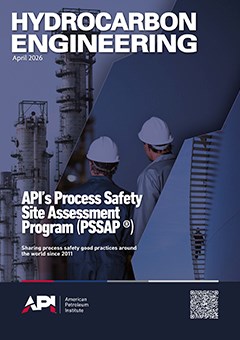
For downstream operators, the current volatility reinforces the importance of resilience – from feedstock flexibility and energy efficiency to strategic decisions that can withstand rapid shifts in global markets and harness innovative technologies to turn uncertainty into opportunity. This issue of Hydrocarbon Engineering is full of technical articles and case studies that can help you on that quest.
Coincidentally, this month’s regional report focuses on downstream developments in the Middle East and North Africa (MENA) region. The piece was largely written prior to the onset of the war in Iran, and concentrates primarily on pre-crisis developments. It makes for a fascinating read, offering insights into pre-conflict planning and strategies that remain relevant today. If you’re keen to stay abreast of ongoing developments during these turbulent times, the Hydrocarbon Engineering team is continuing to provide up-to-date news and analysis on our website (hydrocarbonengineering.com). We’d encourage you to follow us on social media and sign up to our newsletter to receive the latest insights direct to your inbox. Click here for more information: https://www.hydrocarbonengineering.com/newsletter/
- You can listen to the full episode here: https://www.hydrocarbonengineering.com/podcasts/the-rollercoaster-ride-of-2025/
- FLOWERS, S., ‘The energy crisis is coming to the boil’, The Edge, Wood Mackenzie, (19 March 2026), https://www.woodmac.com/blogs/the-edge/the-energy-crisis-is-coming-to-the-boil/